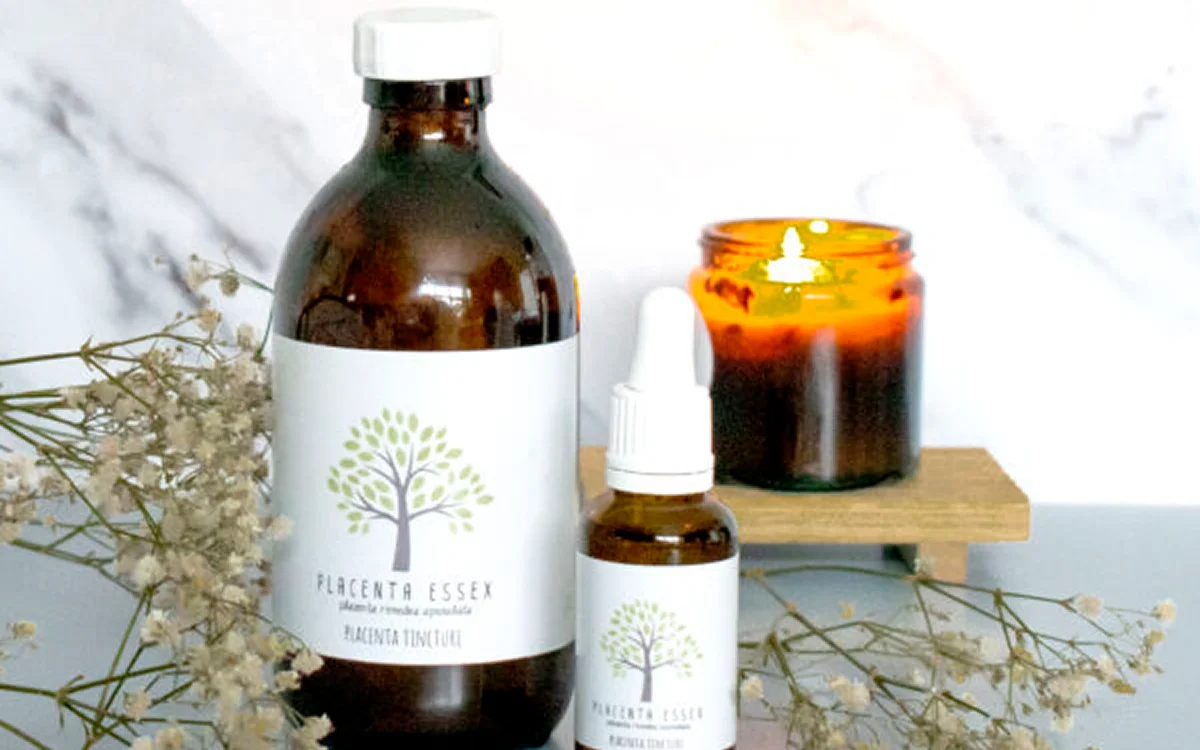
If you’re pregnant and you’ve been hearing more and more about placenta encapsulation, you’re not alone. Across the UK, thousands of new mothers are choosing to keep and consume their placenta after birth — not because it’s a trend, but because the reported benefits are genuinely compelling. From boosted energy levels to improved milk supply and a smoother postnatal recovery, placenta capsules are fast becoming one of the most talked-about choices in the fourth trimester.
But with so much information out there — and plenty of myths alongside it — it can be hard to know what’s fact, what’s anecdotal, and what’s simply not true.
We’re Sam and Becky, the owners of Placenta Essex — the only placenta remedies specialist registered with environmental health in Essex. We cover all Mainland UK hospital and home births, and we’ve helped hundreds of mothers through their postnatal journey. In this post, we’re sharing the five most important things we think every expectant mother should know before making a decision about placenta encapsulation.
1. Your Placenta Is One of the Most Nutrient-Rich Organs in Your Body
It might surprise you to learn just how remarkable your placenta actually is. Throughout your pregnancy, it acts as the lifeline between you and your baby — delivering oxygen, nutrients, hormones, and antibodies. By the time your baby is born, your placenta is packed with an extraordinary concentration of:
- Iron — essential for oxygen absorption and recovering from blood loss after birth
- Vitamin B6 — supports the immune system and helps make antibodies
- Vitamin E — aids in healing damaged skin cells
- Oxytocin — the bonding hormone, also crucial for breastfeeding
- Corticotropin Releasing Hormone (CRH) — your body’s natural stress reducer
- Growth Factors — support cell regeneration and tissue repair
- Cytokines — trigger cell metabolism, helping heal and replace damaged cell
During and after birth, women lose roughly one eighth to one tenth of their blood supply from the wound left inside the uterus where the placenta was attached. Placenta capsules are thought to help replenish these lost nutrients naturally, giving your body the building blocks it needs to heal.
Every other land mammal instinctively consumes their placenta after birth. We’re the only ones who don’t — and many believe we’ve lost something important because of it.
2. The Reported Benefits Are Wide-Ranging — and Many Mothers Swear By Them
There is a growing body of anecdotal evidence from mothers who have used placenta capsules, and the reported benefits are consistent enough to take seriously. While research is still developing in this area, here is what our clients most frequently tell us:
Increased Energy
One of the most commonly reported effects is a significant boost in energy levels. Many mothers describe it as feeling like a natural shot of vitality — particularly welcome in those exhausted early weeks with a newborn. (One of our own team members, Sam, personally experienced this after her second birth and described having to reduce her dose because she felt too alert!)
Improved Mood and Emotional Balance
The “baby blues” affect the vast majority of new mothers, typically arriving around day three after birth when hormones drop sharply. Post-natal depression affects around 1 in 10 women in the UK. Placenta capsules are thought to help stabilise hormone levels naturally, potentially reducing or preventing these low feelings. In a report via IPEN (our training provider), only 2 out of 1,100 women reported low feelings after taking placenta capsules.
Increased Milk Supply
86% of women who use placenta capsules report an increase in milk supply — a significant figure for mothers who want to breastfeed.
Faster Postnatal Bleeding Recovery
On average, postnatal bleeding lasts up to six weeks after birth. Many of our clients report that their bleeding reduced significantly — often to just two to three weeks — when taking placenta capsules.
Faster Overall Recovery
The iron, hormones, and growth factors found in placenta capsules are thought to support the body’s natural healing processes, helping mothers bounce back more quickly from the physical demands of pregnancy and labour.
3. It Is Safe — But Who Prepares Your Placenta Matters Enormously
This is perhaps the most important thing we want every mother to understand. Placenta encapsulation is safe when carried out by a properly trained, certified, and registered specialist. When it is not — risks increase significantly.
At Placenta Essex, your safety is our absolute priority. Here is what sets us apart:
- We are the ONLY placenta remedies specialist registered with environmental health in Essex — inspected and certified by our local council.
- We are fully insured by BGI.uk, a specialist insurer for placenta practitioners.
- We are fully trained in placenta remedies, infection control, food hygiene, and HACCP (Hazard Analysis and Critical Control Points).
- Your placenta is encapsulated in a dedicated preparation facility — only one placenta at a time, eliminating any risk of cross-contamination.
- We hold full Level 2 Food Hygiene and Safety for Manufacturing certification.
When choosing a practitioner, always check for: proof of training, insurance, environmental health registration, and clear hygiene protocols. Don’t be afraid to ask questions — any reputable specialist will be happy to answer them.
You can read more about our standards on our Hygiene & Safety page, and read what our clients have said on our Testimonials page.
When Is Placenta Encapsulation Not Recommended?
There are a small number of situations where encapsulation would not be advised:
- If you had a fever or infection during labour (subject to testing)
- If you were a heavy smoker or used illegal drugs during pregnancy
In all other common scenarios — water births, epidurals, induction, GBS positive, delayed cord clamping, antidepressants during pregnancy — encapsulation is safe. Always check with your healthcare provider if you have specific concerns.
4. The Process Is Simpler Than You Think — and It Fits Around Your Birth
A common reason mothers don’t go ahead with placenta encapsulation is that they assume it will be complicated or stressful to arrange around their birth. In reality, it’s designed to be completely seamless.
Here is how it works with Placenta Essex:
Step 1 — Book Early (From 12 Weeks)
You can book from as early as 12 weeks, right up to the last minute. Once you book, you’ll be added to a private WhatsApp group with Sam and Becky, so you always have direct access to us.
Step 2 — We Send Your Cool Pack at 36 Weeks
Around 36–37 weeks, we’ll send you a cool pack containing everything you need: gel packs for the freezer, a labelled box for your placenta, information cards for you and your midwife, and step-by-step instructions. Everything is clearly labelled — your midwives know exactly what to do.
Step 3 — You Go Into Labour
When you go into labour, your birth partner sends us a message to let us know. Once your baby and placenta have arrived, they update us again. The midwife will place your placenta in our box, pop the frozen gel packs around it, and it’s ready for collection.
Step 4 — We Collect Within 12 Hours
We collect your placenta from your birth location within 12 hours of notification — usually much sooner. We cover all Mainland UK hospital and home births, so no matter where you deliver, we’ve got you covered.
Step 5 — Your Capsules Arrive Within 72 Hours
We process your placenta in our dedicated facility and deliver your capsules back to you within 72 hours. That’s it.
You choose your capsule type — Simple Capsules (our most popular, reported to give more energy), Steamed Capsules (prepared with lemon, chilli and ginger, reported to have a more calming effect), or 50/50 if you’d like the best of both. You can also enhance your package with add-ons such as a Tincture, a Homeopathic Remedy, or a Mumma Balm.
5. You Can Book With Just a £50 Deposit — and Change Your Mind if You Need To
One of the biggest barriers we hear from mothers is uncertainty — “What if I change my mind?” or “What if something changes with my birth?” We completely understand. Pregnancy is full of unknowns, and the last thing you need is more pressure.
That’s why we make booking as low-risk as possible. You can secure your place with a deposit of just £50, with the remaining balance due four weeks before your due date. This means you can book with confidence early in your pregnancy, knowing you’re not committing the full amount straight away.
If your circumstances change — and sometimes they do — we’ll always do our best to support you. Just reach out and we’ll talk it through.
And if you’re already past 36 weeks, don’t worry. We may still be able to accommodate late bookings — just get in touch directly before ordering so we can confirm availability.
Ready to Find Out More?
Placenta encapsulation is one of those decisions that, once made, most mothers say they wish they’d known about sooner. The process is straightforward, the potential benefits are significant, and when you choose a registered, insured specialist, you’re in safe hands.
We’re here to answer any questions you have — no pressure, no rush. Whether you’re 12 weeks pregnant or 39 weeks and just heard about this for the first time, we’d love to hear from you.
- Read our client reviews to hear from mothers who’ve been through it.
- Browse our Products to find the right option for you.
- Or simply get in touch — we’re friendly, we’re experienced, and we’re here.
Placenta Essex — The only placenta remedies specialist registered with environmental health in Essex.
BGI.uk insured. Covering all Mainland UK hospital and home births.